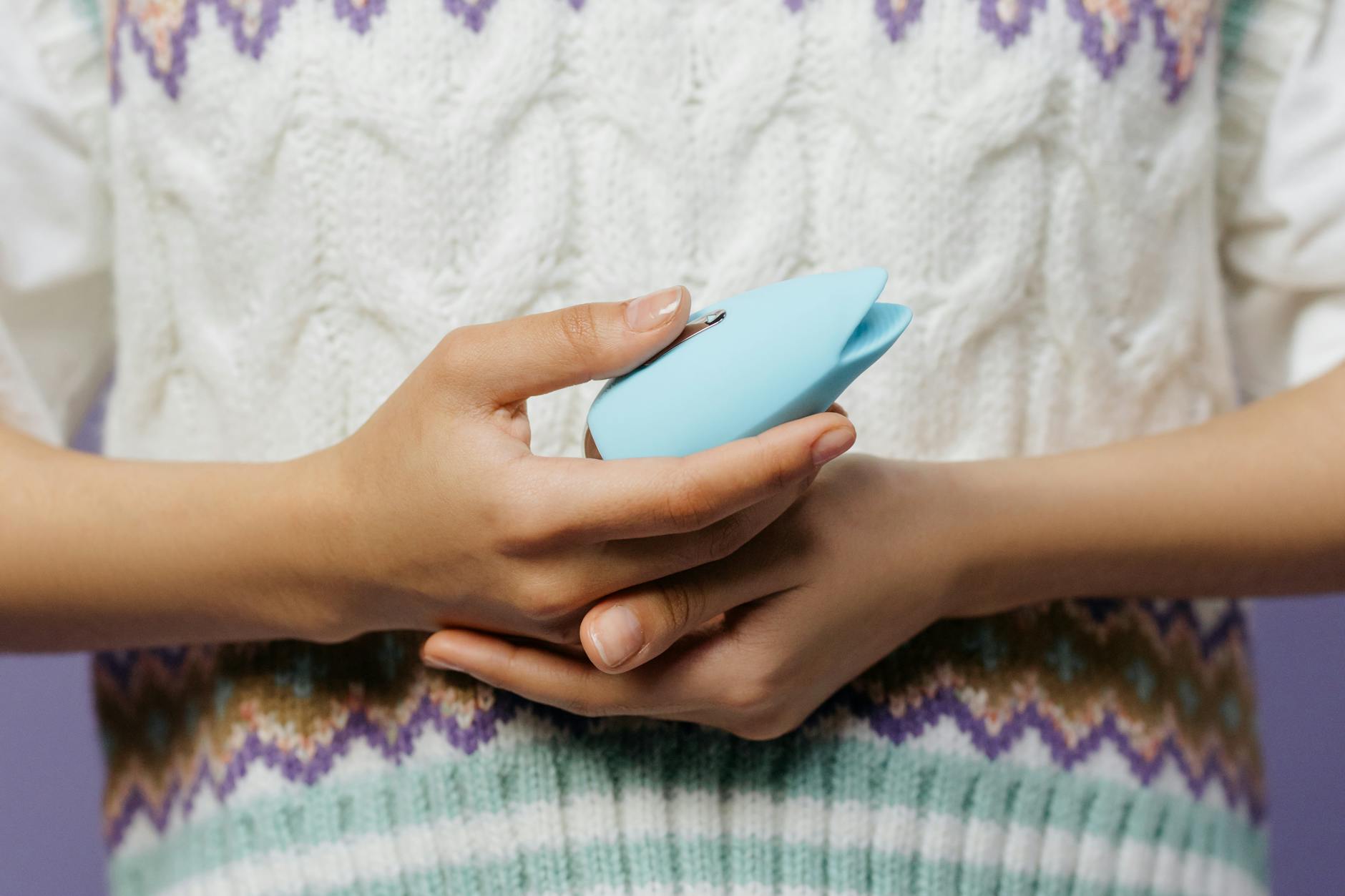
Why Lemon Vibrators Take Longer to Work When Recovering From Childbirth
Your body isn't broken. It's reorganized. Here's what that means for pleasure, how lemon clitoral vibrators fit into your timeline, and when sensation actually returns.
Here's the truth nobody tells you when you're eight weeks postpartum and thinking about sex again: your body isn't the same. It's not broken, and it's not permanently altered. It's reorganized. Everything shifted to make room for a human to arrive, and now everything is slowly shifting back. Except the shift back is not instant, not linear, and definitely not the same for everyone.
This matters because if you're curious about using a lemon vibrator or any clitoral vibrator during postpartum recovery, timing and expectations matter wildly. I'm talking about what actually happens to tissue, nerve sensitivity, and arousal capacity after birth, and why you might reach for The Lemon and find it takes longer to work than you remember.
Let's start with the physical reality. Whether you had a vaginal delivery or cesarean, your pelvic floor has been through a significant event. In vaginal birth, the tissue stretched, the muscles were stretched and potentially torn, and the nerve endings that fire pleasure responses were mechanically stressed. In cesarean birth, the tissue wasn't stretched the same way, but your core was cut through surgically, which affects how your pelvic floor stabilizes and functions.
The clitoris itself didn't move. But the tissue around it changed. The pelvic floor muscles that support arousal and orgasm are fatigued. The vaginal tissue is thinner because of the hormone drop after birth. And here's the part that matters for vibrator use: your nervous system is literally still reorganizing which nerves carry sensation where.
On top of the mechanical stuff, oxytocin is flooding your system if you're nursing. Oxytocin is your bonding hormone, and it's also tied to sexual arousal. Except right now, your brain is channeling that oxytocin into bonding with a newborn, not into sexual receptivity. Your nervous system is working overtime on survival mode, sleep deprivation, and constant vigilance.
So when you try a lemon vibrator weeks after birth and it feels muted or takes way longer to build arousal, you're not broken. Your body is literally still in the reorganization phase.
Most medical professionals give a six-week clearance for penetrative sex after a vaginal delivery. That doesn't mean your body is back to baseline. It means the tissue has healed enough that penetration is unlikely to cause bleeding or infection. That's a mechanical threshold, not a pleasure threshold.
Pleasure recovery usually takes longer. I typically see clients report that sensation and arousal start returning around 12 to 16 weeks postpartum, even with no complications. For people with tearing, episiotomy, or pelvic floor dysfunction, it can stretch to six months or beyond. Cesarean birth generally has a faster pleasure recovery curve than vaginal birth, partly because the pelvic floor wasn't mechanically stretched, but every body moves at its own pace.
Why does this matter for lemon vibrators specifically? Because a clitoral vibrator like The Lemon works through consistent suction and stimulation to your most sensitive nerve tissue. If that nerve tissue is still healing and reconnecting, the vibrator will feel less responsive. It's not the vibrator. It's the timeline.
Your pelvic floor is a hammock of muscles that runs from your pubic bone to your tailbone. It holds everything in place, supports arousal, and is critical for orgasm. After birth, these muscles are either overstretched (if you had a vaginal delivery) or suddenly unsupported in a different way (if you had surgery). Either way, they need time and deliberate work to recover tone and strength.
When your pelvic floor is weak or fatigued, stimulation from a clitoral vibrator feels different. Your body can't generate the same muscular response that creates that building sensation toward orgasm. It's like trying to do a pushup with exhausted arms. The movement is possible, but the strength and responsiveness aren't there.
This is also why kegel exercises or pelvic floor physical therapy becomes genuinely useful during this period. Not because you're broken, but because deliberate pelvic floor work speeds up the reorganization. A pelvic floor therapist can help you figure out whether your muscles are tight (need relaxation) or weak (need strengthening). Most postpartum bodies need both at different times.
If you're breastfeeding, your prolactin and oxytocin are elevated. Elevated prolactin actually suppresses dopamine, which is one of the key drivers of sexual desire. This isn't a flaw. It's your body's way of making sure you're bonded to and attentive to a newborn. But it does mean that sexual arousal is biochemically harder to access.
Your estrogen is also still low, particularly if you're nursing. Low estrogen means thinner vaginal and clitoral tissue, less lubrication, and less blood flow to the genitals when you do get aroused. So using a lemon vibrator when estrogen is low feels physically different. The tissue is less engorged, which means less feedback and slower arousal buildup.
If you stopped nursing, hormone recovery is faster. If you're still nursing, this stays true until you wean. Neither is better or worse. They're just different timelines.
Honestly? Solo exploration usually works better than partnered sex during early postpartum recovery. Here's why: when you're alone, there's zero performance pressure. You can go slow. You can stop. You can spend 20 minutes finding what feels good instead of rushing toward an orgasm that might not come anyway.
I generally recommend waiting until around week eight or nine after birth to even try a vibrator, and starting at the lowest intensity setting. A lemon vibrator like The Lemon gives you suction options, which is gentler on healing tissue than direct vibration would be. Start with pattern one or two. Your nerve endings are relearning what pleasure feels like. Ease in.
Take longer warm-up time than you used to. Where five or ten minutes of foreplay worked before pregnancy, you might need 20 to 30 minutes now. Your body needs time to send arousal signals up and down your nervous system when things are still reorganizing.
If you feel pain instead of pleasure, stop. Sharp pain, burning, or persistent aching isn't something to push through. That's a signal that tissue still needs healing. A pelvic floor physical therapist can figure out whether it's tension, scar tissue, or inflammation.
One of the hardest parts of postpartum pleasure recovery isn't the physical stuff. It's the emotional stuff. You might remember that your body used to respond quickly and intensely. Now it doesn't. That gap between expectation and reality can feel like loss, which it is in a small way. You lost easy access to something that was part of your identity.
But here's what I see in practice: most people report that once sensation and arousal return, postpartum sex and pleasure often feel better than they did before. You've built a new awareness of your body. You've gotten over any lingering shame. You understand priorities differently. And sometimes, rebuilding pleasure slowly creates a kind of attentiveness that makes the eventual return of sensation feel genuinely new.
Your body isn't behind. It's not broken. It's integrating massive change. That takes time.
If pain persists past week 12 postpartum, or if you have zero return of arousal or sensation by six months, talk to a pelvic floor physical therapist or your OB. Sometimes scar tissue, pelvic floor dysfunction, or referred pain from c-section incisions needs manual therapy. Sometimes postpartum depression or anxiety is dampening arousal in a way that's psychological. Both are real. Both are treatable.
If you're considering using a lemon vibrator or any clitoral vibrator and you're unsure whether your body is ready, that conversation is worth having with a therapist who understands postpartum recovery. Not because vibrators are dangerous during recovery, but because having guidance on timing and expectations makes the experience less frustrating.
Your pleasure matters, and it will return. The timeline is just longer than you might have expected.
Medically, once you've received clearance for penetrative sex (typically six weeks postpartum), vibrator use is generally safe. However, sensation recovery is slower than tissue healing. Most people feel more responsive to vibration around 12 to 16 weeks postpartum. Start at week eight or nine with low intensity, and pay attention to how your body responds. If you feel pain, wait longer.
This is normal and temporary. Your nerve endings are still reorganizing, your pelvic floor is recovering tone, and your hormones are still adjusting. The vibrator isn't the problem. Your tissue needs more time to wake back up. Patience and consistent slow exploration usually bring sensation back.
No. Clitoral stimulation doesn't interfere with healing as long as you're not experiencing pain. Some people find that gentle exploration actually helps them reconnect with their body and notice where healing is progressing. Just avoid internal vibration or pressure until you're further along in recovery.
Completely normal. Hormones, sleep deprivation, physical recovery, and emotional adjustment all suppress sexual desire. The absence of desire isn't a problem to fix immediately. It's a signal that your system is busy with other priorities. Desire usually returns between three and six months postpartum, sometimes longer. If it hasn't returned by nine to twelve months, that's worth discussing with a healthcare provider.
Start alone. Solo exploration removes performance pressure and gives you space to understand how your body is responding without anyone watching or waiting. Once you feel more connected to your own arousal and sensation, partnered exploration becomes easier and more enjoyable.
Talk to a pelvic floor physical therapist. Weakness and tightness require different approaches. A therapist can assess your specific situation and guide you through exercises or manual therapy that actually helps. This isn't something to white-knuckle through alone. Professional support makes a real difference in recovery speed.
Recovering pleasure after childbirth is a journey, not a race. Your body is doing extraordinary work reorganizing itself. A lemon vibrator or any clitoral vibrator can be part of that journey once the timing is right. Until then, patience with yourself is the most important tool you have.
If you're navigating postpartum recovery and want to talk through what's realistic for your body and timeline, reach out. Pleasure is part of your wellbeing, and you deserve support in reclaiming it.