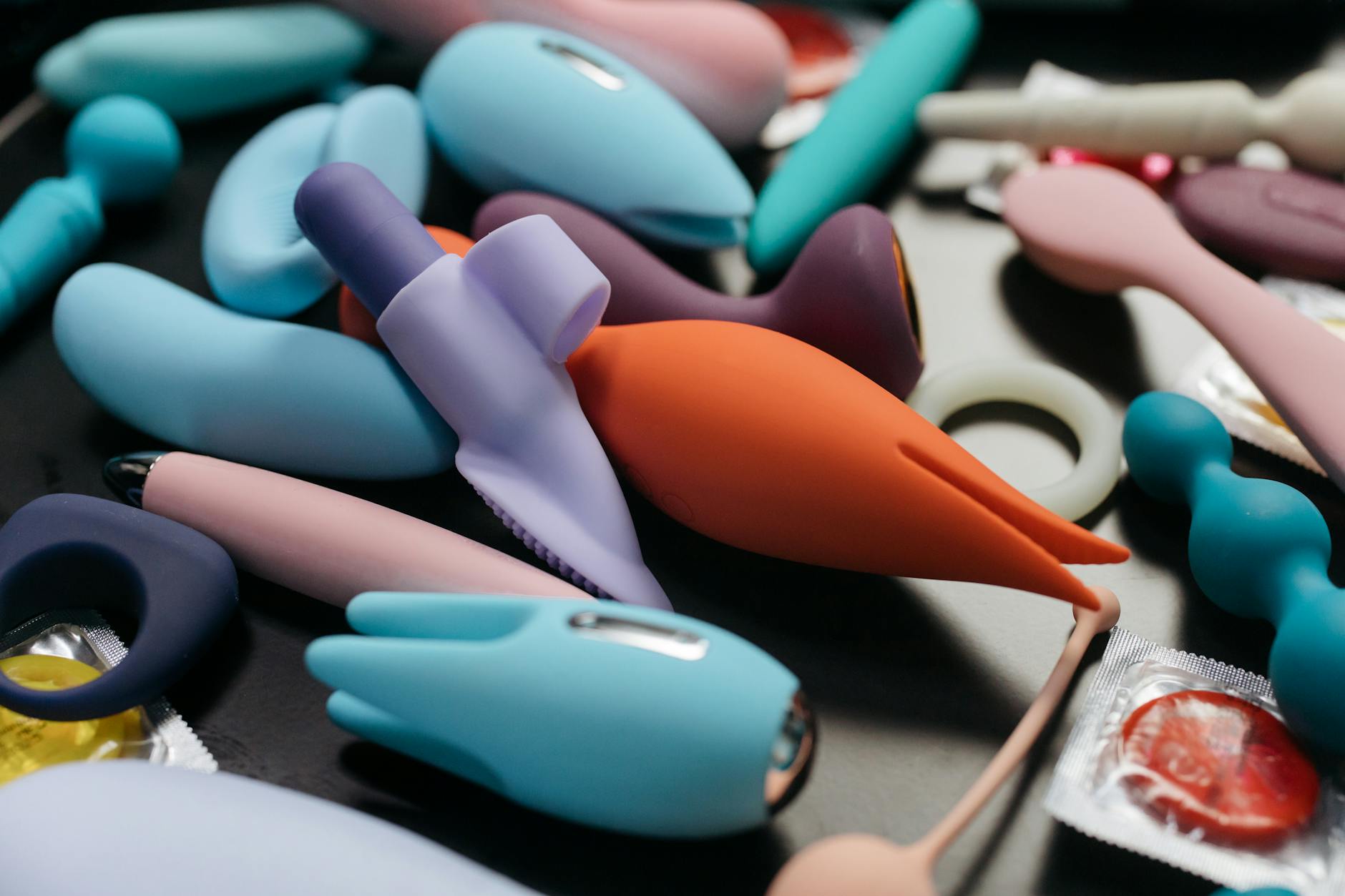
You're alone, using your lemon vibrator, and the sensation is one thing. Your partner walks in, sits on the bed, and suddenly the exact same device feels completely different. The intensity might feel sharper. Your arousal might stall entirely. Or you might orgasm faster than you ever have. This isn't your imagination. This is your nervous system shifting into a different mode.
When you're alone, your parasympathetic nervous system (the "rest and digest" branch) is running the show. You're safe. You can wander your mind. Your body can relax into sensation without scanning the room for threat.
The moment a partner is present, your nervous system gets a data update. Whether you consciously perceive them as safe or not, your amygdala (the threat-detection part of your brain) is doing background processing. This doesn't mean you're scared. It means your system is in a mild state of hypervigilance. You're more alert. Blood flow concentrates in your prefrontal cortex (decision-making) instead of diffusing equally through your whole nervous system.
For some people, this activation actually enhances arousal. For others, it creates a subtle brake. Both responses are normal. Both can coexist in the same person across different moments.
Using a lemon vibrator alone, you own the entire experience. You set the rhythm, the intensity, the mood. If something feels weird, you can pause without explanation. No one is watching your face or your body's involuntary responses.
The moment a partner is present, vulnerability enters the equation. You're now being witnessed. This creates a psychological layer that affects physical sensation in measurable ways. Your body may tense slightly as you navigate the question: "How do I look right now?" or "What is he thinking?" That micro-tension affects clitoral suction and pressure sensation.
Many people find that the first orgasm with a partner present feels muted or impossible, even if they've had powerful orgasms alone. This isn't a reflection of attraction or safety in the relationship. It's a reflection of the nervous system managing multiple streams of input simultaneously.
If you typically use your lemon sucker at setting 5 when alone, you might find that same setting feels almost shocking with a partner in the room. Or conversely, it might feel less intense because your nervous system is distributing arousal energy toward the partner bond instead of purely toward the clitoral sensation.
This is partly neurological. It's also partly about attention. Alone, 100% of your attention is on the sensation. With a partner present, some of that attention goes to them, to the relationship, to navigating the moment. Your brain literally has fewer resources allocated to processing vibration. Sensation dilutes.
The clitoral vibrators that work best for partnered play tend to be ones you can operate independently while maintaining eye contact or being touched elsewhere. The design of the lem vibrator works particularly well here because the suction sensation creates a distinct anchor for focus without requiring intense hand-coordination.
When alone, you might warm up and orgasm in 10 to 12 minutes. That's baseline. With a partner present, arousal can either accelerate (excitement, anticipation, external touch) or decelerate (self-consciousness, the need to manage both sensations and the relationship dynamic). Neither trajectory is more "right."
What matters is understanding which you are, so you don't misinterpret it as loss of attraction or desire. If you're someone who needs longer to warm up with a partner watching, that's not a problem to fix. It's information to work with.
Start with communication before the moment arrives. Not a clinical conversation about nervous systems, but a simple one: "I might warm up differently with you here, and that's normal for me." This reframes whatever happens as expected, not disappointing.
Consider modified positioning. Lying on your back with a partner beside you creates different neurology than lying with your back to them or facing them directly. Some people find that angling away reduces the self-consciousness loop. Others find that facing a partner's affection actually accelerates arousal. Experiment.
Add external touch. If your partner is touching your arm, your back, or your inner thigh while you use the lemon vibrator, you're giving your nervous system more input to work with, which can paradoxically reduce the "I'm being watched" sensation and increase the "we're in this together" sensation.
Manage intensity intentionally. If you know you typically need setting 3 alone but feel overstimulated at that level with your partner present, start at setting 1 or 2. You're not losing capacity. You're accommodating the fact that your nervous system is now processing multiple inputs and operating in a slightly more activated state.
If you're using a lemon clitoral vibrator in partnered sex for the first time, it's worth using it alone first while thinking about your partner, or while they're in an adjacent room. This creates a psychological middle ground. Your nervous system is aware of their presence without the full intensity of eye contact or physical proximity.
Some people benefit from starting with your partner present but not engaged. They're reading or working nearby, and you're using your vibrator with reduced but real awareness of them. This trains your nervous system to relax into the sensation while no longer completely alone.
Other people need the full jump. For them, the slowness of staged introductions actually increases anxiety. They prefer to include a partner actively from the beginning, with communication and touch, because the engagement is clearer than the ambiguity.
Here's what I observe across couples: when someone brings a vibrator into partnered sex, they're often unconsciously checking whether their partner approves. Not explicitly, but somatically. Your body is scanning for signs of judgment, arousal, boredom, or insecurity on your partner's face.
If your partner is genuinely delighted to be part of this, your nervous system picks that up and relaxes. Sensation improves. If your partner is tolerating it or performing enthusiasm, your system detects the inauthenticity and tightens. The lemon vibrator might feel less effective not because something is wrong with your body, but because you're managing an unstated relationship tension.
The felt difference in sensation is often the signal that something about the dynamic itself needs attention before the vibrator will feel good.
Your nervous system is distributing arousal energy across multiple channels: the physical sensation, your awareness of your partner, your self-consciousness, and the relational dynamic. When you're alone, that energy concentrates on the clitoral sensation. This doesn't mean partnered sex is worse. It's just different. Over time, many people learn to integrate all those channels into a fuller arousal experience, but the first encounters often feel muted. This is temporary.
Not if you communicate about it. If the experience is awkward or doesn't create the connection you wanted, that's actually valuable information. The problem only arises if you pretend it felt good when it didn't, or if you assume your partner hated it without asking. One awkward experience with a lemon sucker is not a referendum on your relationship. Talk about it, and adjust.
Not less effective. Different. You might need a higher intensity setting, more warm-up time, or more direct touch from your partner to reach the same physical result. This is neurological, not a sign of diminished capacity. Many people discover they can have different types of orgasms depending on whether they're alone or partnered, and both are valuable.
Ask directly. Not during the moment, but before. "I'd like to try using a vibrator when we're together. How do you feel about that?" Listen to what they actually say, not just whether they say yes. If they sound uncertain, explore that. If they sound enthusiastic, believe them. If they sound anxious, ask what that's about. The conversation itself often matters more than the tool.
That discomfort is real and worth respecting. You don't have to perform sexuality for your partner's consumption. Some people use vibrators alone and keep that private. Others integrate them into partnered sex. Both are valid. If you want to explore this but feel blocked, it's often a sign that something about vulnerability, permission, or shame around your own pleasure needs attention first. This is relationship work, not vibrator work.
Absolutely. If your partner seems threatened or dismissive about using a lemon clitoral vibrator, you'll feel that energetically, and your arousal will flatten. You can't relax into pleasure when managing someone else's jealousy or shame. If this is happening, the vibrator isn't the real issue. The relationship communication is. This is where conversations about what vibrators actually provide (sensation, not replacement) become essential. Consider reading about this together or talking with a relationship coach who specializes in communication in established relationships with sexual tools.
Your lemon vibrator will feel different with a partner present. That difference isn't failure. It's your nervous system adapting to a new context. Some people find that presence amplifies pleasure. Others need more runway to get there. Most discover that over time, as they learn to relax into being witnessed, the experience becomes richer, not more limited.
Start with honest conversation. Move slowly. Pay attention to what your body is telling you about the dynamic, not just the sensation. And remember: the best partner-inclusive experience isn't the one that matches your solo experience. It's the one that feels authentic and good to both of you.