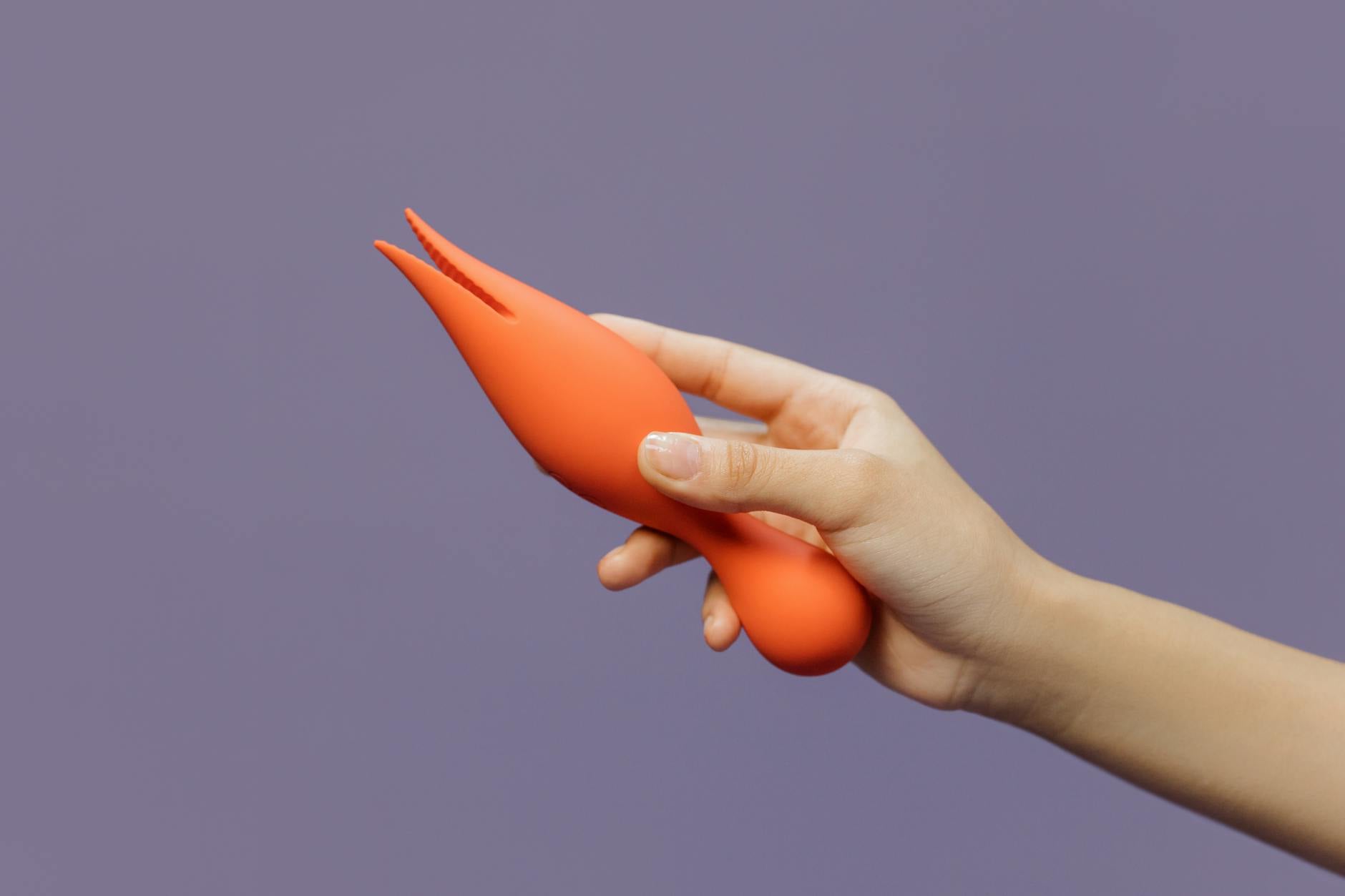
The conversation that feels impossible is actually just a confidence problem. Here's how to bring it up, frame it right, and actually enjoy the answer.
You want to talk to your partner about lemon vibrators, but you're not doing it. You're standing in the shower mentally rehearsing the conversation. You've opened the browser three times. You've deleted the text draft twice. Here's the thing: you're not afraid of the vibrator. You're afraid of what their reaction means.
Will they think you're not satisfied? Will they feel replaced? Will they say yes and then resent it? Will they say no and then you feel rejected for wanting something so basic as pleasure?
These are real questions. They deserve real answers. And they deserve a conversation that's actually built for success instead of just hoping it lands okay.
Yes, some partners are insecure. But most partners are just confused. They think a vibrator means you're unhappy with them, not with your own body's responsiveness. They imagine you using it alone in shame, not together in daylight. They've absorbed a weird cultural script where toys mean something went wrong in the relationship.
None of that is true for most people. You're not introducing a vibrator because the relationship failed. You're introducing it because your body is still learning what it wants, and lemon vibrators are specifically engineered for clitoral pleasure in ways that fingers and penises are not. That's not a criticism of your partner. It's just biology.
The resistance you're predicting often melts the second you reframe the conversation from "I need this because you're not enough" to "I want us to do this together because it feels incredible and I want to share that with you."
Don't have this conversation at 11 p.m. on a Tuesday after you've both had a rough day. Don't lead with it during an argument about something else. Don't frame it as a solution to a problem you've been complaining about.
Better timing: right after sex when you're both happy and connected, or on a random weekend afternoon when you're relaxed. The conversation doesn't have to happen during sex, but it should happen when you're feeling close, not when you're feeling distant or defensive.
The second thing about timing: don't make this a surprise. Some people like gifts. Most people like informed consent more. Give your partner a day or two to sit with the idea before you're expecting a yes or no.
Open with honesty, not apology. "I've been thinking about trying something new with you, and I want to talk about it." Not: "I have this crazy idea, and you'll probably think it's weird, but..."
Name what you want, and name why. "I've heard really good things about lemon vibrators, and I'm curious about how they'd feel with you. I think it could be really fun for both of us." You're not saying "I'm bored." You're saying "I'm curious."
Give them an easy yes and an easy no. "I'm not expecting an answer right now. I just wanted to bring it up so we could both think about it. What do you think?" Then actually let them think about it. Don't push for an immediate yes. Immediate pressure makes people defensive.
If they're hesitant, ask questions. "What's making you feel uncertain?" Listen to the actual answer, not the answer you're afraid of. Often it's something small: "I've never done this before" or "I'm not sure how it works." Those are solvable problems. Shame or anger are different, and they require a different conversation.
The most common response is not yes or no. It's a pause. It's "I need to think about it." That's actually a good sign. They're not shutting down. They're processing.
What helps here: offer to show them something. Not the toy itself (unless they ask), but information. Send them an article about how lemon clitoral vibrators work. Share a review that sounds like it's written by a real person, not marketing copy. Let them see that this is normal and common and not a sign that anything is wrong.
Some partners need to understand the mechanics before they can get curious. Some need to see that other people do this. Some need to know that you've been thinking about this thoughtfully, not just on a whim.
Give them that information without pressure. Then let it sit.
Here's where a lot of people fumble. They get a yes, and suddenly they're overthinking the execution. Will it be weird? What if it doesn't work? What if they hate it?
First time using a lemon vibrator with a partner: keep it simple. You don't need a whole production. You don't need to be in lingerie or have the lights dimmed perfectly. You just need to be together, relaxed, and curious.
Start with touching. Let them hold it. Let them feel what it does. The first experience doesn't have to be you using it during sex. It could be you showing them how it feels on your hand, telling them what sensation they're creating. That's actually more intimate than jumping straight to penetrative sex with a toy involved.
And this is important: the first time might feel awkward. You might laugh. You might realize you want to adjust something. That's completely normal. Better to have that awkwardness on day one than to spend months building it up as this huge thing.
Once you've tried it, the actual game-changer is the five-minute check-in. Not a deep therapy session. Just: "Did that feel good? What did you like? Anything you want to try differently next time?"
This is where clitoral vibrators stop being a scary unknown thing and start being just another tool in your toolkit. You're gathering data. You're learning what works. You're treating it like an actual experience you're having together, not a test your partner is passing or failing.
Most partners who were hesitant at first become genuinely enthusiastic once they realize that using a lemon sucker with you is not about them being inadequate. It's about pleasure being collaborative.
Sometimes they say no. Not "not right now." Straight up no. That's a different conversation.
Respect the no, but understand it. "That's okay. I'm curious what's behind the no, though. Is it something about the toy specifically, or something bigger?" Sometimes it's a timing issue. Sometimes it's genuine discomfort. Sometimes it's a boundary that matters to them.
What you don't do is pretend you didn't ask. You don't resent them. You don't go use a lemon vibrator alone and feel guilty about it. What you do is decide if the no is negotiable or not.
Many couples find that a genuine no becomes a "maybe later" after six months. But some don't. And that's information you need to work with. A good couples therapist can help you figure out if this is a real incompatibility or just a conversation that hasn't landed yet.
Your partner might surprise you and love this. They might feel relieved that you're bringing it up. They might have been thinking about lemon vibrators themselves but didn't know how to ask. They might actually feel closer to you because you trusted them enough to be honest about what you want.
Pleasure isn't a zero-sum game. Adding a lemon clitoral vibrator to your intimate life doesn't subtract anything from your connection. It often adds to it.
So take a breath. Write down what you want to say. Pick a good moment. And then just say it. The conversation you're terrified of is probably just a conversation. The one where you both end up more connected, not less.
Frame it as something you want to explore together, not something you need because they're not enough. Use specific, positive language: "I'm curious about trying this with you" beats "I need something different." The difference is subtle, but it's the difference between an invitation and a complaint.
Ask why. Is it moral discomfort, insecurity, unfamiliarity, or genuine incompatibility? Most "weird" is just "unfamiliar." Showing them that hello nancy products are normal and that thousands of people use lemon suction vibrators regularly can shift that perspective. If it's deeper than that, a couples therapist can help you both understand what's underneath.
You can, but slower usually works better. Show them how it works on your hand first. Use it alone while they watch, if you're comfortable. The physical sensations are new for both of you. There's no prize for jumping straight to full integration. Build into it.
That's equally valid. You get to have boundaries. But also explore what the discomfort is about. Is it genuine discomfort, or is it cultural messaging telling you that pleasure should be a certain way? Sometimes the boundaries that feel strongest are the ones worth questioning.
Pay attention to their body language and their words in the moment. After, ask a genuine check-in question: "Did that feel good for you?" Listen for enthusiasm, not just politeness. And leave room for them to change their mind. "If you hate this, we can never do it again. I genuinely want to know." Most people will tell you the truth if they know honesty is actually welcome.
No. This is private. You don't owe anyone information about your intimate life. Keep it between you two, maybe a therapist if you need support, and that's it.
Talking to your partner about lemon vibrators is not harder than other vulnerable conversations. You already know how to say hard things. You already know how to ask for what you want. This is just practice at doing both things at once.
The conversation you're afraid of often turns into the conversation that brings you closer. So lean into that. Your pleasure matters. Your honesty matters. And your partner probably cares more about your happiness than you're giving them credit for.
Start with the script. Pick the moment. Take the breath. And then just tell them the truth. Everything else follows from there.