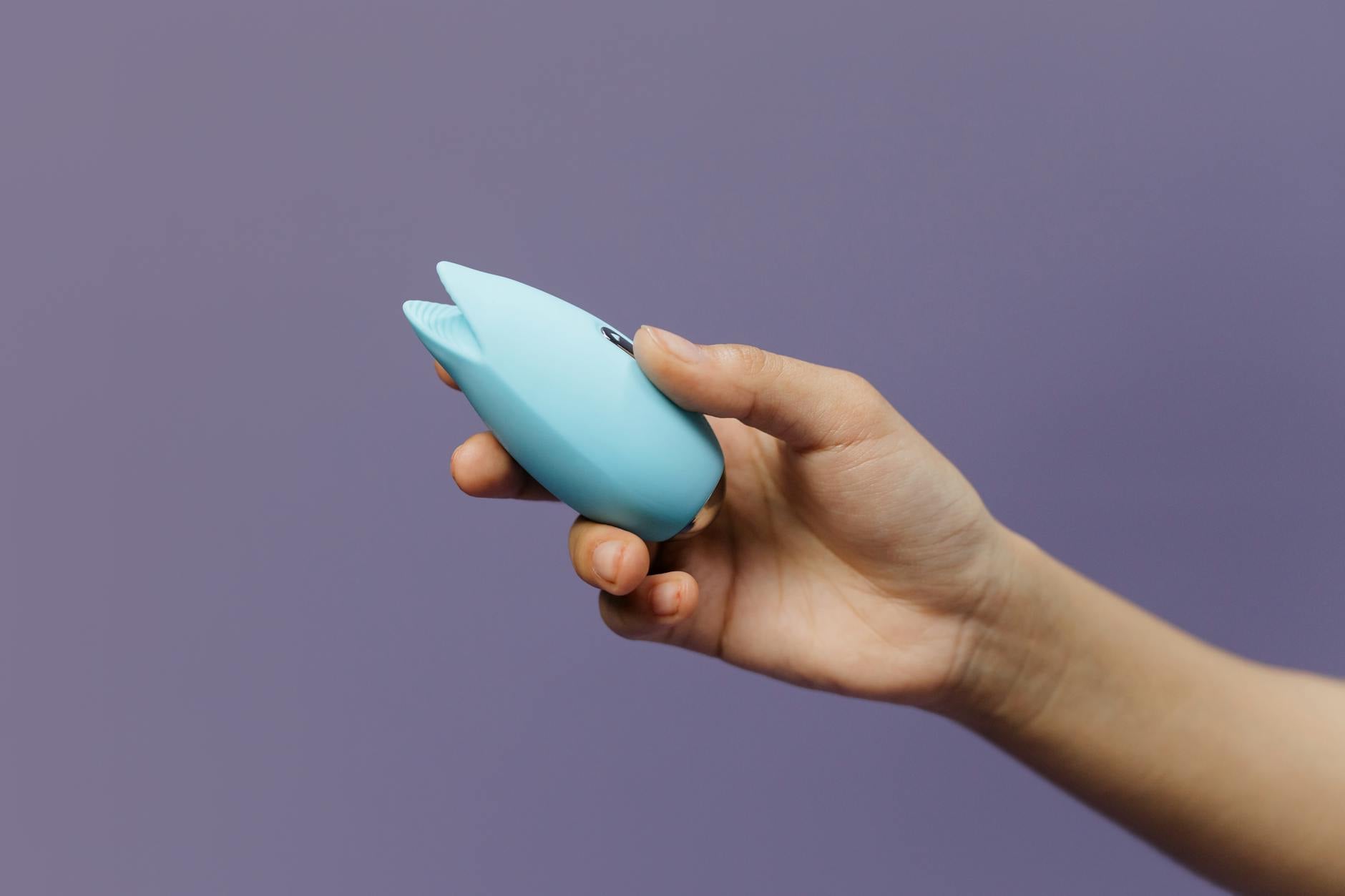
How to Use Lemon Vibrators in a Long-Distance Relationship
Distance doesn't have to mean disconnection. Here's how lemon clitoral vibrators and intentional communication can keep physical intimacy alive when you're miles apart.
Long-distance relationships kill more couples than bad timing, wrong person, or lack of love. They kill the small rituals. The casual touch. The ability to show up for each other physically when the world gets heavy. And then there's the sex part, which nobody wants to admit is actually hard to navigate.
But here's what I've noticed working with couples on this exact problem: the pairs who stay connected aren't the ones pretending distance doesn't matter. They're the ones who get intentional about it.
Let me back up and explain why I'm singling these out. Most vibrators are solo devices. You use them, you finish, done. Lemon clitoral vibrators operate in a different register. The suction pattern, the intensity range, the way they build sensation — they're designed around pleasure that feels responsive, almost like interaction. That matters when you're trying to maintain intimacy across space.
Think about what long-distance couples are actually craving when sex comes up. It's not just orgasm (you can get that alone). It's the feeling of being desired by your specific person. It's communication. It's knowing someone chose you in that moment. That's where these tools become genuinely useful. A lemon vibrator in your hand while your partner talks you through it, or watches, or guides you creates a different quality of connection than most people expect from a device.
Honestly, the equipment doesn't matter if the conversation doesn't happen first. I can't tell you how many couples try to introduce this without talking about it, and it lands weird. Someone feels embarrassed. Someone worries it means their partner isn't satisfied with phone sex anymore. Someone doesn't know what role they're supposed to play.
Start here instead. Have the conversation during the day, not at night when you're heading toward intimacy. Say something like: "I miss you. I miss touching you. I was thinking about ways we could stay physically connected that feel good for both of us. Would you be open to exploring that together?" That's it. You're naming the thing. You're asking permission. You're saying it's not shame, it's longing.
Then listen to what your partner actually says. Some people are ready immediately. Some need to think about it. Some have privacy concerns or timing issues. This conversation is the container. Everything else goes inside it.
Once you've both agreed, here's how this actually works in practice.
Start with video if you both feel safe with it. Video creates presence in a way phone calls don't. Your partner can watch your face, your breath, the moment you lose control. That feedback loop is what makes the device feel less like a tool and more like an extension of their attention.
If video isn't an option or doesn't feel right, phone sex with narration works. Your partner talks to you while you use the device. "Tell me what you're feeling right now." "Go slower." "I want to hear you." That back-and-forth is what keeps it interactive instead of solo.
With a lemon clitoral vibrator specifically, start on the lower settings. These devices build sensation differently than traditional vibrators. The suction pattern means less is often more. Your partner doesn't need to see or hear intense stimulation to feel connected. Actually, the slower build often creates more vulnerability, which deepens the sense of shared intimacy.
Here's the unglamorous part that actually determines whether couples stick with this or abandon it after one awkward try: logistics.
You need privacy. Both of you. Not almost privacy. Not privacy where you're listening for roommate sounds. Actual privacy. That might mean waiting until your partner's traveling, or until a time when you both have a locked door and headphones. Long-distance couples often skip this step because it feels like friction, but that friction is usually what kills the whole thing.
Timing zones matter. If you're on opposite sides of the world, you might only have one window per week where you're both awake, work is done, and privacy is possible. Protect that time like you'd protect any other date. Put it on the calendar. Treat it with the same seriousness you'd give an in-person visit.
Texting beforehand creates momentum. "I've been thinking about tomorrow night" or "I miss you" gives your partner time to mentally transition into the headspace. That 24-hour window of anticipation is actually part of the intimacy, not a delay tactic.
I'm going to be direct here because this is where most couples get stuck: talking during sex feels weird. Your brain finds it unnatural. That's normal and temporary.
Start simple. "Does this feel good?" "I love knowing you're with me right now." "I'm thinking about you." Narrate what you're experiencing without performing. "I'm getting more sensitive now" is sexier and more useful than trying to sound like porn. Your partner wants to know what's actually happening in your body, not a fantasy version.
If you forget what to say, that's information. Silence happens. If you're using a lemon vibrator and your partner is present with you (even across distance), they're getting something. They're getting the sound of you, the reality of your pleasure, the confirmation that you want them enough to be vulnerable.
And if it feels awkward the first time? That's actually success. Awkwardness means you're doing something real, something that matters. The awkwardness fades. The connection doesn't.
One thing I see with long-distance couples: they swing between extremes. Either they try to replicate in-person frequency (which creates pressure and burnout), or they let it fade to nothing (which erodes the relationship). The middle path is the one that works.
Maybe this happens once a month. Maybe twice. Maybe every other week. The number matters less than the consistency and the genuine desire on both sides. It's better to have one night every two weeks that you're both excited about than to force something weekly that feels obligatory.
Also: this isn't a substitute for visiting each other in person. I want to be clear about that. Physical presence, actual touch, sleeping next to someone — those aren't luxuries. They're primary. What this is, is a way to keep tenderness alive in the gaps between visits. It's a reminder that you're still bonded, still desired, still choosing each other.
Here's what I've observed: couples who navigate shared pleasure across distance often report that their communication improves everywhere else. They're more honest about what they need. They're less resentful about the distance. They feel less alone.
That's not because the device is magic. It's because you've created a space where vulnerability is safe. Where asking for what you want has been practiced and didn't end badly. Where your partner has shown up for you in an intimate way despite the friction.
Long distance is hard. Staying connected through intentional pleasure, clear communication, and tools designed for genuine sensation is one way to make it manageable. If you're considering this with a partner, start with the conversation. Everything else builds from there.
Yes, completely. Make sure you're in a private space, that you trust your partner not to record (and ideally that you have a conversation about that first), and that your device is fully charged beforehand. Since you won't want to fumble with charging during the call, full battery makes the experience smoother. The video doesn't have to be explicit or full-body. Many couples keep it from the shoulders up, focusing on facial expression and breathing rather than visual detail.
Then don't do it. Phone sex works perfectly well. Audio intimacy is valid, and honestly, for some couples it's more connected because there's less performance pressure. You can guide each other through the experience with words alone. "I'm touching myself now," "You're turning me on," "Tell me what you want" — that's an entire intimate exchange without any video.
Wait until the situation changes, or get creative about timing. Maybe it's late at night, or early morning. Maybe it's when your roommate is out. Maybe you use headphones and plan for short check-ins rather than extended sessions. Feeling safe and private matters more than frequency. A rushed, stressed encounter will feel worse than no encounter at all.
It's increasingly common, especially among people who want to maintain intimacy intentionally. The stigma around using devices with partners is fading because couples are realizing that tools don't replace connection — they can deepen it. If you're both consenting and excited, it's absolutely normal.
Talk about the hesitation specifically. Is it embarrassment? Privacy concerns? Worry about performance? Feeling like it means something's wrong? These are different problems that need different solutions. Maybe you start smaller. Maybe you build trust by sending voice messages first, or by having a lighter conversation about fantasy. There's no rush. Long-distance couples have time to work with.
There's no rule. Some couples do it weekly. Some monthly. The frequency that works is the one where both people feel connected and neither feels pressured. If you're dreading it, that's a signal to scale back or reconsider the approach. If you're genuinely excited, that frequency is probably right.
Distance changes the logistics of intimacy, but it doesn't change the fact that you want to feel close to your person. Lemon vibrators, phone calls, honesty about what you need, and grace when things feel awkward — these are the actual tools. Use them. You're building something real.