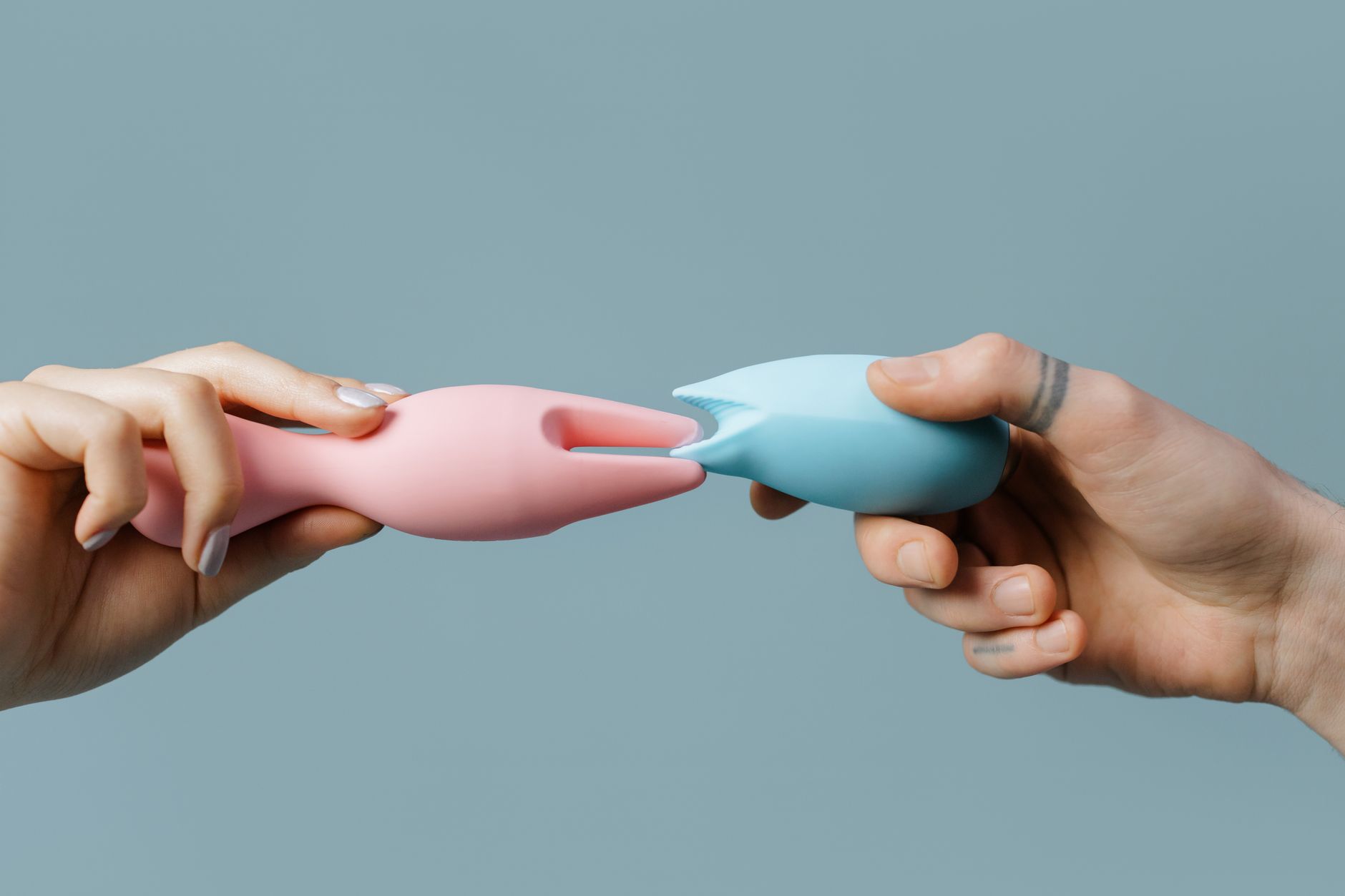
How to Use Lemon Vibrators With a Partner After Infidelity
Infidelity fractures trust and desire. Here's how lemon clitoral vibrators can become a bridge back to vulnerability, pleasure, and each other when everything feels broken.
Infidelity doesn't just damage trust. It erases the baseline assumption that your partner's hands, your shared bed, your private moments together are safe. Sexual reconnection after betrayal isn't about reigniting passion. It's about slowly, carefully rebuilding the belief that vulnerability won't be weaponized again. That takes time, honesty, and often, completely new rituals.
This is where tools like lemon vibrators come in. Not as a fix (nothing fixes infidelity overnight), but as a neutral third presence that can help both partners show up differently in the same room.
Three things happen after betrayal that make traditional partnered sex nearly impossible to navigate:
First, the person who was cheated on often loses the ability to fully relax in their partner's presence. Their nervous system is hypervigilant. Every touch carries a question mark. Second, the person who strayed often carries shame so heavy it becomes its own wall. They're either performing hyper-enthusiasm to prove contrition, or they're shut down entirely. Third, you both lose the shorthand you had. Every gesture needs context now.
A lemon vibrator (or any quality clitoral vibrator) interrupts that dynamic because it's external to the relationship wound. It's not a replacement for your partner's touch. It's a way to relearn pleasure together without the full weight of arousal sitting on one person's shoulders. The person receiving pleasure gets to focus on sensation without the cognitive load of "am I performing well enough to convince them I'm committed?" The person giving attention gets to be generative and present without their own shame blocking the way.
Research on post-infidelity recovery shows that couples who can access pleasure together (even slowly, even tentatively) rebuild intimacy faster than those who avoid sexuality altogether. But pleasure after betrayal requires distance, perspective, and permission. A lemon vibrator provides all three.
This step cannot be skipped. You cannot bring a vibrator into a post-infidelity bedroom and hope it smooths things over. That's a shortcut to more resentment.
The conversation should happen outside the bedroom, fully clothed, when neither of you is trying to be sexual. It looks something like: "I've been thinking about how we can start to rebuild intimacy. I know everything feels complicated right now. I found something that might help us both show up differently. Can we talk about trying it?"
Then you listen. If your partner says no, the answer is no. If they're curious but skeptical, that's workable. If they're afraid (and they might be), that's information worth having out loud.
The person who was unfaithful should expect to do more of the emotional labor here. You broke the trust. You earn back the right to comfort by consistently choosing honesty, even when honesty is uncomfortable. Using a lemon vibrator together is only healing if both people genuinely consent, not just comply.
Ditch the expectation of orgasm entirely. Seriously. This is not about reaching a climax. It's about your nervous systems learning to be in the same room again without defensive walls.
Start with the person who was cheated on receiving. Not because they "deserve it," but because pleasure is the harder task here. They've been in a state of sexual shutdown. Reintroducing pleasure to their body (especially with their partner watching and supporting) is profound work.
Use a water-based lubricant. Start at a lower intensity setting on the lemon vibrator (levels 1-3). The person receiving should be lying down, fully clothed at first if that feels safer. The receiving partner can hold the vibrator themselves, or the other partner can, but check in constantly. "Is this okay? Do you want more or less? Are you present right now?"
These check-ins do something critical. They remind both of you that you can ask for what you need and be heard. That's the real work.
The first session might last 10 minutes. It might not lead anywhere sexually. That's perfect. You're rebuilding the belief that your bodies can share space without catastrophe.
Infidelity recovery isn't linear. Some weeks you'll feel ready to be intimate. Other weeks, a touch from your partner will send your nervous system into alert mode. That's normal, and expecting yourself to "move on" sexually before you're actually ready is self-sabotage.
Gradually, over 4-8 weeks of consistent (even brief) time together with the lemon vibrator, things shift. The person who was betrayed starts to trust that this is different. The partner who strayed learns that showing up means patience, not performance. You both start to remember that pleasure is possible between you.
When you're ready to introduce partner touch alongside the vibrator, go slowly. Maybe your partner uses the lemon vibrator while their hands explore yours. Maybe they use it on you while kissing your shoulders. Maybe you guide their hand while they hold it. The point is that pleasure starts to be collaborative again, not a battlefield.
You'll know you're moving forward when three things happen:
You can be present in your body during intimate moments without spiraling into doubt. Your partner can take responsibility for their actions without needing reassurance every five minutes that you forgive them. You both can access pleasure without it feeling like a test of commitment.
This doesn't mean the infidelity is forgotten or fully healed. Recovery is measured in years, not weeks. But when you can use a lemon vibrator together and feel genuine connection rather than obligation, you've crossed a real threshold.
If one or both of you becomes triggered during intimate moments, pause. Don't push through. Trauma shows up in real time, and your body is not a problem to solve through willpower.
If shame is preventing the unfaithful partner from being present (they shut down, go numb, can't make eye contact), that's a sign you need a couples therapist who specializes in infidelity. The work is too deep for a toy to bridge alone.
If resentment keeps building despite your efforts, or if either of you realizes you don't actually want to rebuild this relationship, that's important information too. Not every partnership survives infidelity, and that's not a failure. It's clarity.
Let me be direct: a Hello Nancy lemon vibrator is not going to save your relationship. But it can become a symbol of willingness. Every time you use one together, you're both choosing vulnerability, pleasure, and each other over the wound. That choice, repeated consistently, rewires the nervous system faster than therapy alone.
The lemon's consistent suction stimulation is particularly useful here because it requires less direct engagement with your partner's body. The person using it can focus on what they're feeling. The partner providing support can focus on presence and attunement. There's less performance, more real sensation.
The physical act of rebuilding pleasure is inseparable from rebuilding trust. And tools designed thoughtfully, used with honesty, can help you both get there.
Vibrators aren't magic, but they do create a bridge. They shift the nervous system out of threat mode by introducing a new, external element that's not tied to the original wound. When both partners approach it with genuine intention and consent, it creates moments of real connection that the trauma-activated brain desperately needs. The repetition of showing up together, and experiencing pleasure together, gradually reprograms the belief that intimacy is safe again.
Refusal is information. If they won't engage in any form of sexual reconnection because they're ashamed, that's something to address in therapy. If they refuse because they think you should just "get over it," that's a sign they're not taking responsibility seriously. Either way, don't force it. Healing requires participation from both sides, not just one person trying harder.
Most couples report that the awkwardness starts to soften around week 3-4 of consistent, brief sessions. By week 8, it often feels less like a recovery tool and more like a normal part of intimate time together. But timelines vary wildly depending on the depth of betrayal, the amount of therapy you're doing, and your relationship's baseline.
No. A lemon vibrator can support the work you're doing in therapy, but it cannot replace it. Infidelity requires professional guidance to work through the underlying issues that led to the betrayal in the first place. The vibrator is a tool for rebuilding physical intimacy. The therapist helps you understand why the infidelity happened and whether this relationship is worth rebuilding.
Pause immediately. Don't push through. Trauma doesn't respond to forcing. Ask what came up, listen without defending, and slow way down. You might need to take a week off and regroup with your therapist. Healing isn't a race. It's more important to move slowly and stay safe than to rush the process.
There's no single "right" answer, but I usually recommend the person who was cheated on receives first. That helps them rebuild the belief that their partner can attune to their pleasure without selfish intent. Later, you can switch roles. The key is that both of you feel agency. Nobody should feel obligated or like they're proving something.
Infidelity doesn't end a relationship if both people genuinely choose to show up differently. But it requires admitting that the old dynamic broke, and you have to build a new one from scratch. That's grief work, not just trust work.
A lemon vibrator won't erase what happened. But it can become a ritual of choosing each other again, over and over, until that choice stops feeling like an act of faith and starts feeling like a fact of your partnership. That's where healing lives.
If you're rebuilding intimacy and want support beyond these tools, reach out to a couples therapist or start a conversation with your partner about what reconnection actually looks like for you both. You don't have to figure this out alone. Reach out at /contact if you want resources or guidance.