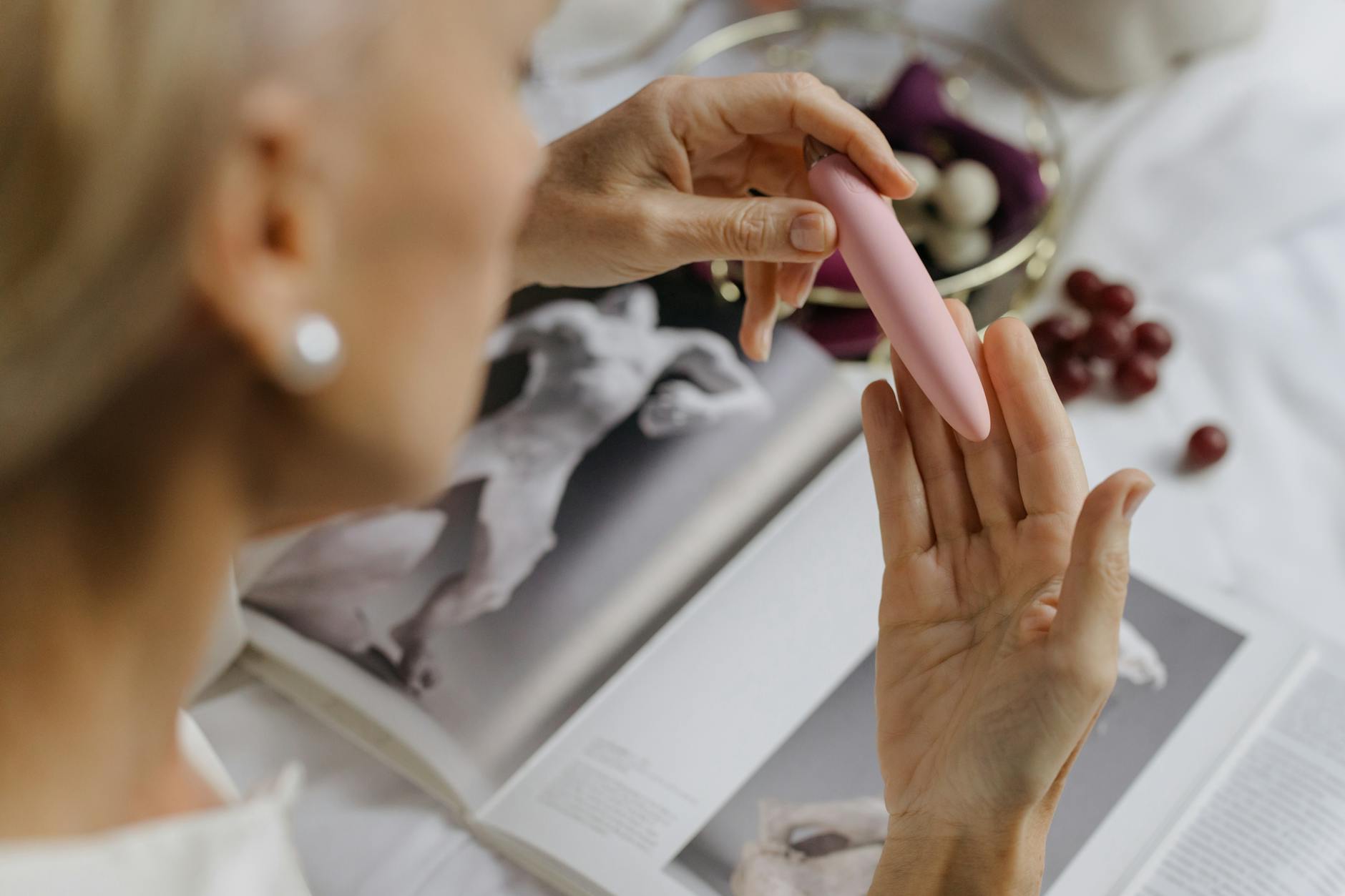
Let's be real. When your partner leaves for a work trip or extended absence, the instinct for most people is to put pleasure on hold. You wait. You stay focused. You're "being good." Here's the thing: that approach often backfires. After weeks of suppressing desire, you either feel resentful when they return, or you've disconnected so thoroughly from your own body that reconnecting takes effort you didn't plan to give.
There's another way. Using lemon vibrators and other forms of solo pleasure while your partner is away isn't a replacement for them. It's the opposite. It's maintenance. It keeps you in touch with what feels good, sustains your sense of desire, and often makes the reunion more authentic because you haven't spent the entire time performing a version of yourself without needs.
Here's what the research on long-distance relationships shows: couples who maintain their own sexual autonomy report higher satisfaction when reunited than couples who put everything on pause. This isn't intuitive for everyone, but the mechanism is simple. When you neglect your own pleasure for weeks or months, your body gets used to the deprivation. Your nervous system settles into a lower baseline of arousal. When your partner returns, reconnection requires you to rebuild that responsiveness from scratch.
Conversely, when you maintain regular solo practice with something like a lemon clitoral vibrator, you keep your neural pathways for pleasure active. Your body stays familiar with sensation, arousal, and release. You're not starting from zero when they walk back through the door. You're warm. You're ready. You know what you like.
There's also a psychological element. Solo pleasure during separation gives you something that's entirely yours. Not something you're waiting to share, not something that feels incomplete without them. A practice that belongs to you. That ownership, ironically, makes you a better partner when you're together again because you're not carrying resentment about the time you spent wanting something you told yourself you weren't supposed to have.
The hardest part isn't the vibrator. It's permission. Most of us were raised with the message that masturbation while in a relationship is either unnecessary or vaguely disloyal. Neither is true, but the guilt lingers. So first: acknowledge it. You're allowed to touch yourself while your partner is away. Full stop.
Second, choose a time and space. This doesn't have to be elaborate. It means picking a moment when you're not exhausted and won't be interrupted. Many people find early morning or just before bed works better than trying to carve time out during the day. The goal is consistency, not performance. Once or twice a week is enough to keep your body responsive.
Third, start without pressure. You don't need to use a lemon vibrator every time. Some solo sessions can be slow, exploratory, touch-only. Others can be vibrator-focused and goal-oriented toward orgasm. Mixing the approaches keeps things from feeling mechanical. The point is repetition, not intensity.
If you've never used a lemon clitoral vibrator, this separation is actually a perfect time to experiment because there's no performance pressure. You're learning for yourself, not figuring it out in real time with a partner in the room.
Start with the lowest setting. Many people jump to high intensity immediately because they assume faster equals better. It doesn't. Low intensity for five to ten minutes often gets you further than two minutes on high. Your clitoris has thousands of nerve endings; they respond better to consistent, moderate stimulation than to jolt-and-chase.
Angle matters more than you'd think. The clitoral head is often most responsive when stimulated at a slight angle, not straight-on. Lemon vibrators are designed for this. Experiment with pressure and angle before you assume a pattern or intensity isn't working for you.
Warm-up first. Even if you're not with your partner, your body still needs five to ten minutes of mental focus and gentle touch before you move to the vibrator. Use that time to notice what your body wants. Are you tense in your shoulders? Is your jaw clenched? Release those things first. Arousal is harder when your nervous system is braced.
Here's where it gets interesting. For many couples, solo pleasure during separation can actually become part of your intimate language with each other. Some partners text about it. Some share what they discovered. Some keep it private but acknowledge that it happened. There's no single right way, but what matters is that you've talked about it before the separation starts.
If your partner is hesitant or uncomfortable with the idea, that's worth a conversation. Often the discomfort comes from insecurity or outdated beliefs about what solo pleasure "means." These beliefs are usually unexamined. Getting them on the table, explaining that this is about maintenance rather than replacement, and clarifying that you want to stay connected to your own body often shifts things.
If your partner is fully on board, great. Some couples even maintain a shared practice while apart. Sending photos, videos, or detailed descriptions of solo sessions. This is not for everyone, but for some, it's genuinely connecting. You're staying in each other's worlds even when you're physically separate.
The most common barrier to solo pleasure during long-distance periods isn't logistics. It's narrative. You'll tell yourself: "They're working hard, I shouldn't be thinking about pleasure." Or: "If I get used to this, I won't miss them as much." Or: "It's not fair that they're away, so I deserve to suffer a little too."
None of these are helpful. Your partner's work stress has nothing to do with your right to pleasure. Missing someone and maintaining your own sexuality are not opposing forces. And suffering doesn't make a relationship stronger. It makes you resentful.
When you catch yourself in one of these stories, name it. "That's the guilt talking. That's not actually true." Then move forward anyway. The guilt usually fades after a few sessions of giving yourself permission.
The reunion doesn't automatically flow back into partnered sex. You both may have different expectations, different energy levels, different ideas about how to pick up. Talk about this before they return if you can. Do you want sex immediately? Do you want a slow rebuild? Do you want to talk first? There's no default here.
One thing that often helps: share what you discovered in your solo practice. Not in a clinical way, but genuinely. "I found out that I respond better to slow starts." Or: "That pattern on the Lemon Sucker's lemon vibrator actually works really well for me." Sharing this information is intimate. It's you saying, "Here's what my body likes." Your partner gets to learn. You get to feel known. The reunion becomes less about performing desire and more about actual connection.
If you've used a toy during the separation, you might also introduce it into partnered sex. Some couples find that toys during separation make it natural to include toys during togetherness. Others keep them separate. Again, no rule. The point is that you've had permission to explore, and you're bringing that knowledge into the relationship rather than compartmentalizing it.
If your partner is gone for months at a time, the stakes of this practice feel different. That's when you might think about ways to stay connected beyond solo pleasure. Many long-distance couples find that exploring solo pleasure after years of partnered sex becomes easier when you're also maintaining other forms of intimacy. Phone sex, sexting, shared fantasy discussions. Solo pleasure is part of the picture, not the whole picture.
You might also check in on your own emotional state. Long separations can trigger anxiety, depression, or just flatness. Your relationship with pleasure often reflects your overall mood. If you're struggling emotionally, addressing that (maybe with a therapist, maybe with a partner conversation) matters as much as maintaining physical practice.
The last week before your partner returns is interesting. Your anticipation might spike. Your solo practice might shift. You might use your lemon vibrator more intensely, or you might step back and save your energy for reunion. There's no wrong choice. Just notice what feels right for you.
Some people find that slowing down in the final days builds anticipation for partnered reconnection. Others find that maintaining their usual practice keeps them grounded and relaxed instead of wound up with expectation. Neither is better. What matters is that you're making the choice consciously, not defaulting to guilt or performance.
Completely normal. The vast majority of people in relationships maintain some form of solo practice, whether that's with a vibrator or without. Using a lemon clitoral vibrator during separation is no different. It's self-care, it's maintenance, it's normal.
That depends entirely on what you've discussed and what beliefs your partner holds. Many people are completely supportive. Some have old-fashioned views about solo pleasure. The only way to know is to talk about it before the separation happens. If you're afraid of their reaction, that's worth exploring. Either you'll feel safe having the conversation, or you'll discover something important about your relationship that needs attention.
As often as feels good. Once a week, three times a week, daily. There's no rule. What matters is that it feels like self-care, not obligation. If you're doing it because you think you "should," scale back. If it feels nourishing, continue.
Yes. Whether you should or want to is up to you. Some couples share. Some keep it private. Both are fine. Just know that keeping it secret often requires a lot of mental energy. Sharing, even briefly, often feels like relief.
No. Missing someone and maintaining your own sexuality are completely separate. You can miss them deeply and still touch yourself. You can feel lonely and also feel pleasure. These things coexist.
Then don't. This isn't a mandate. Some people lose desire during separation. Some feel guilty about pleasure. Some just aren't interested. Honor what's true for you. The goal is staying connected to your own body, whatever that looks like.