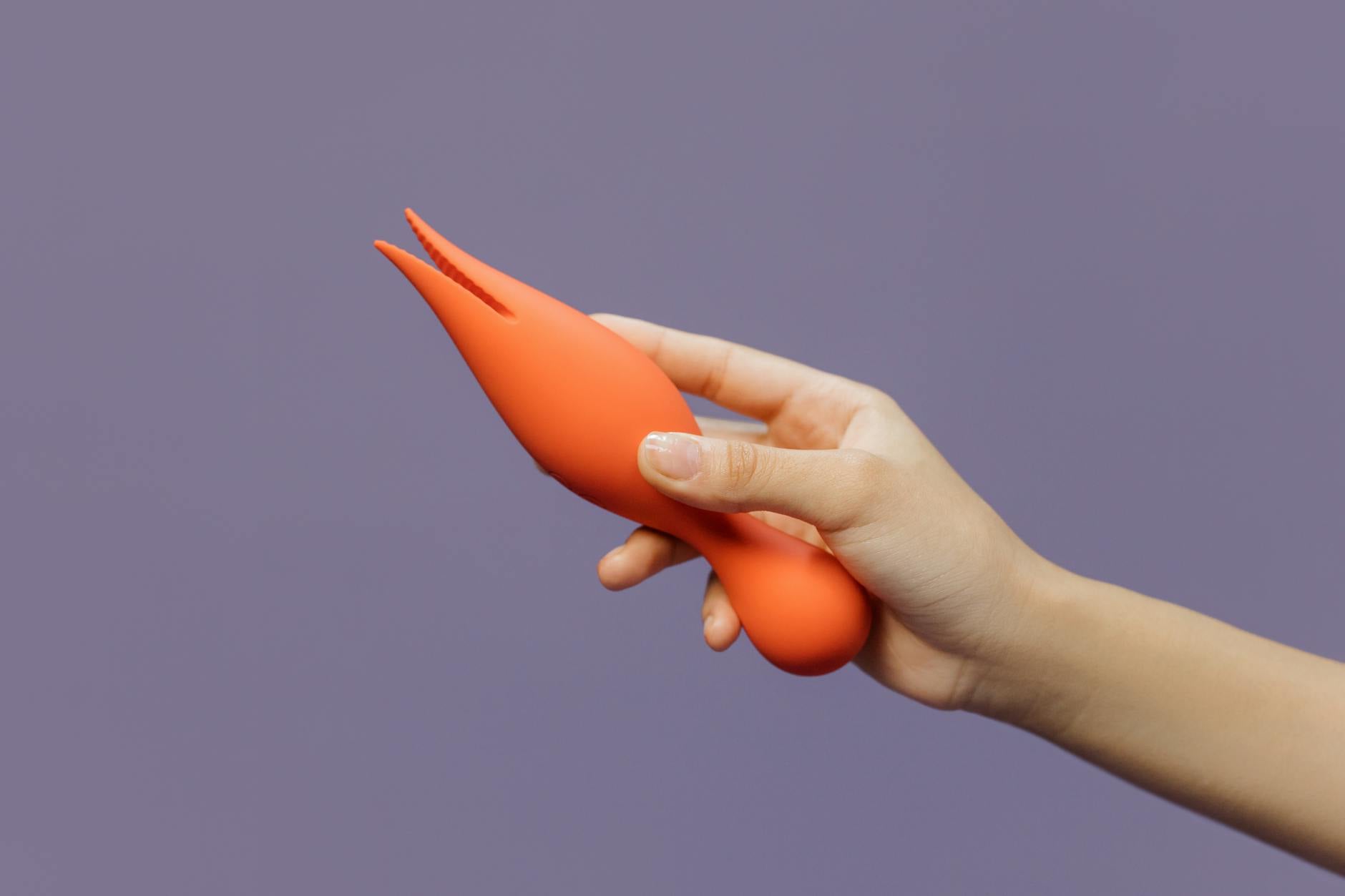
How to Use Lemon Vibrators if You've Never Had an Orgasm
Here's what nobody tells you: never having had an orgasm doesn't mean you can't. It often means you haven't found the right combination of pressure, pattern, and permission yet.
There's a difference between "I haven't had an orgasm yet" and "I'm incapable of having one." Most people who think they're in the second group are actually in the first. They've just been using the wrong approach, the wrong stimulation, or the wrong headspace. And honestly? A lemon clitoral vibrator like the Lem can be the turning point.
Here's what I see clinically: people who haven't experienced orgasm often describe using a toy once or twice, waiting passively for something to happen, and then deciding it doesn't work for them. But orgasm isn't passive. It's a skill you learn, and lemon sexual toys are specifically designed to teach you that skill because of how they work.
Most vibrators use direct vibration. You press them against your skin and hope the tremor pattern does the work. Air-suction devices like the Lem work differently. They create a gentle suction that pulls the clitoral tissue into a chamber while pulsing air patterns stimulate the nerves inside. This matters because it's less about "buzzing faster and harder" and more about consistent, layered stimulation that builds gradually.
For people who've never orgasmed, this is huge. Direct vibration can feel too intense, too one-note, or actually irritating. Suction feels more like sustained pressure that intensifies in waves. Your nervous system has time to recognize what's happening and build toward release instead of feeling assaulted.
The lemon sucker approach also means you're not fighting friction or numbness. The sealed chamber creates its own rhythm, so after the initial 2-3 minutes of settling in, your body actually starts to respond instead of tensing up against the sensation.
Three things change everything: time, privacy, and lubrication.
Time first. Budget 30-45 minutes for your first session. Not because it takes that long to have an orgasm, but because you need time to relax into the experience. If you're checking the clock or worried someone will walk in, your body won't cooperate. Orgasm requires your nervous system to shift out of threat mode. That takes time.
Privacy second. Lock the door. Put your phone in another room. Tell your household you need an hour to yourself and you're not to be interrupted. The anticipatory anxiety of "what if someone finds out" is the number one orgasm killer I see, and it's completely solvable by removing the actual threat.
Lubrication third. Use a water-based lube even if you don't think you need it. The Lem creates suction, which means direct contact between the silicone and your skin. A thin layer of lube reduces any friction, makes the seal feel more comfortable, and actually helps the sensation travel better. You're not using it because something's wrong with your body. You're using it because you're optimizing.
Sit or lie somewhere comfortable. The Lem works in any position, but most people find lying back with knees bent, or sitting against pillows, works best for their first time. You want to be able to relax completely.
Apply lube to the opening of the Lem and to your skin. Start the device on pattern 1 or 2 (the lowest settings). Gently press the opening against your clitoris and let the suction create a seal. You should feel it pull slightly. That's the Lem working.
Don't expect fireworks in the first minute. What you're looking for is whether the sensation feels pleasurable or neutral. If it feels irritating or too intense, move to the lowest pattern or step back for 30 seconds and try again with a different angle. Some people need the Lem positioned slightly above the clitoris rather than directly on it.
Spend 3-5 minutes on pattern 1 or 2, even if nothing dramatic is happening. Your nervous system is learning this sensation. Your body is building a map.
You're not waiting for lightning to strike. You're waiting for a subtle shift. It might feel like a small tingle that starts spreading. It might feel like the stimulation getting more intense even though you haven't changed the pattern. It might feel like your breathing changing or your muscles tightening slightly.
All of those are signs your body is responding. Many people stop because they expect a massive, unmistakable sensation. But for first-timers, orgasm often starts as something you notice rather than something that crashes over you.
Once you feel that shift, stay with it. You can increase to pattern 3 or 4, or stay where you are. The key is not to panic or overthink. Just notice the sensation and let your body do what it's doing.
If you don't orgasm in your first session, that's statistically normal. You're learning how your body responds to a new type of stimulation in a new context. That learning has value even if it doesn't end in orgasm.
What matters more is whether the sensation was pleasant or at least interesting. If it felt good but nothing climactic happened, that's progress. Try again in a few days. Your body will remember the sensation and build on it.
If it felt uncomfortable or irritating, you have options. You might need more lube, a different position, a lower pattern, or a different time of day when you're less stressed. There's no one-size-fits-all here. I've seen people have their first orgasm with a clitoral vibrator in their third session, their tenth session, or their thirtieth. The pattern they all share is consistency and patience, not timing.
Here's the honest part: a lot of people who've never had an orgasm have some version of the belief that their body is broken. They've tried, it didn't work, so the conclusion is "this is just not for me." But that story is almost always incomplete.
Your body isn't broken. You might have learned to tense against pleasure instead of leaning into it. You might have been raised with the idea that your pleasure doesn't matter or isn't worth time. You might have experienced touch that felt unsafe or coercive, and now your nervous system is protective. You might just need a different type of stimulation than you've tried.
A lemon clitoral vibrator removes some of that pressure because the stimulation is so consistent and externally driven that you can't "mess it up." You're not trying to control your body's response. You're just letting the device do its job while you notice what happens.
If you've tried the Lem or another quality lemon vibrator consistently over several weeks and still feel nothing, there might be something else worth exploring. Sometimes orgasm difficulty is tied to medication side effects, hormonal imbalances, past trauma, or deep-rooted anxiety about pleasure.
None of that means you're broken. It means you might benefit from working with a therapist or sex coach who specializes in this. I often recommend couples work on communication around pleasure too, even if you're using the vibrator solo. Many people discover that learning to talk about pleasure actually unlocks the physical capacity for it.
For most first-timers though, the Lem is exactly the right starting point. You deserve pleasure that feels good and works with your body, not against it.
Most people feel a noticeable shift in sensation within 3-5 minutes of the device being active. An actual orgasm might take 10-20 minutes your first few times, or it might take several sessions before your body is comfortable enough to release. The timeline depends on how relaxed you are, how stressed you are that week, and whether your body has experienced orgasm before. Consistency matters more than duration. Three 20-minute sessions spaced a few days apart will teach your body more than one 90-minute marathon.
Yes. Both can affect arousal and orgasm capacity, but a lemon clitoral vibrator actually works well for this because the suction-based stimulation bypasses some of the numbing that can come with medication. You might need longer warm-up time or a higher pattern, but the vibrator isn't the limiting factor. If you're concerned about how your medication is affecting pleasure specifically, that's worth discussing with your doctor or a sex therapist.
Not quite. You should feel the suction and the air patterns, even if they don't feel particularly pleasurable at first. If you feel literally nothing, check that the seal is working (you should feel the Lem pull gently when activated), that you're using enough lube, and that you're giving it at least a few minutes. If you still feel nothing after several tries, you might need a different type of toy or stimulation, and that's okay. Not every toy works for every body.
Start on the lowest pattern and give yourself permission to step back. You can also try positioning the Lem slightly above your clitoris rather than directly on it, which softens the sensation. Some people need to build tolerance gradually. Use it for just 2-3 minutes on the lowest setting several times before trying longer sessions or higher patterns. Your nervous system will adapt as it learns the sensation is safe.
Yes, but carefully and with support. For some trauma survivors, reclaiming pleasure through self-directed stimulation is genuinely healing. For others, any genital touch can trigger a stress response, and that's real too. If trauma is in your history, working with a trauma-informed therapist alongside exploring toys is the safest path. They can help you build a grounded framework for pleasure that doesn't re-traumatize you.
Not at all. Your first time should be solo, private, and pressure-free. You're learning how your body responds without anyone else's expectations or timing in the room. Once you're comfortable with your own response, bringing a partner into the experience is an entirely different conversation. Many people find that having learned their own pleasure first actually makes partnered exploration much better.
Never having had an orgasm is not a life sentence. It's usually just a puzzle with a solution you haven't found yet. A lemon clitoral vibrator removes a lot of the guesswork because the suction-based stimulation is so consistent and purposeful. You're not relying on your body to generate arousal from nothing. You're giving your nervous system a very clear, very specific signal to build on.
Give yourself time. Give yourself privacy. Use lube. Start low. And remember that learning is just as valuable as arriving. Every session teaches your body something, even if it doesn't end in orgasm yet. Trust that process. Your pleasure matters, and you deserve to experience it.