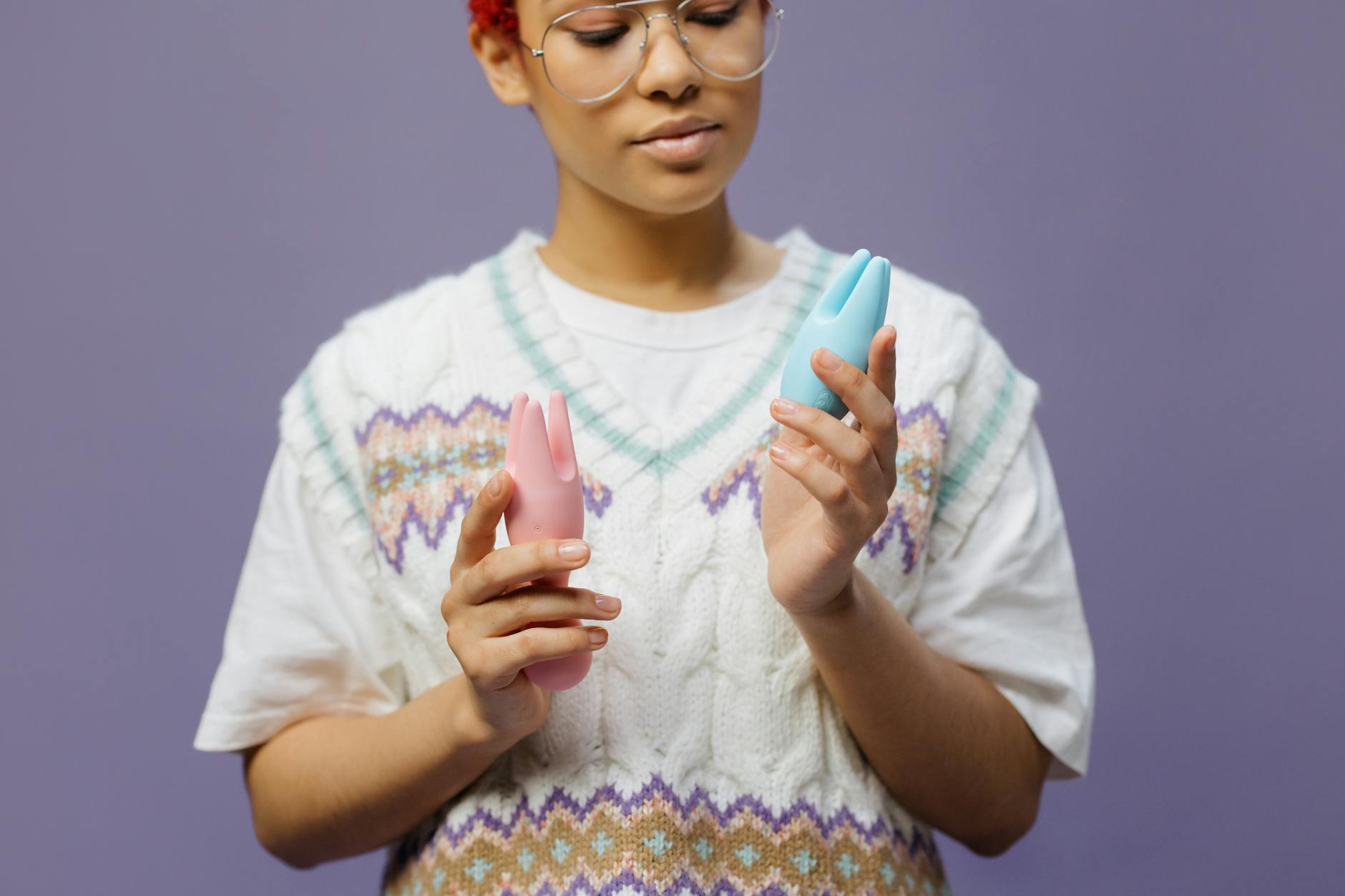
You want to bring a vibrator into sex with your partner. And you're nervous about it. That's normal. The fear usually sounds like one of three things: "Will they feel inadequate?" "Will they think I'm not satisfied?" "What if it kills the moment?" Here's what I know after years of working with couples: those worries are about communication, not the vibrator. And that's actually good news, because communication you can fix.
Lemon vibrators, particularly lemon clitoral vibrators, have become a bridge tool for couples precisely because they're not about replacing anything. They're about adding precision and consistency to what you're already doing together. The Lemon Sucker community has taught me something: couples who introduce vibrators thoughtfully often report deeper connection afterward, not less.
I've seen this play out hundreds of times. One partner buys a vibrator without telling the other, hides it, or springs it on someone mid-sex. Every single time, it lands wrong. Not because the vibrator is wrong. Because there was no shared story first.
Here's what changes the dynamic: frame it as research, not as a solution to a problem. Not "I think we need this" but "I've been reading about how people use these, and I'm curious. Want to try it together?" The shift is subtle but it matters. You're making it collaborative from the beginning.
The best conversation I've heard went like this: "I saw something that might feel amazing for me, and I'd love you to be part of that. I trust you enough to try it. Are you interested?" That opens a door instead of putting someone on the defensive.
Male partners in particular often carry a specific fear: that a vibrator means they're not enough. This is rarely about arrogance. It's about vulnerability. Many people with penises have been taught that their primary role is to provide stimulation. A vibrator can feel like a referendum on their performance.
Here's the reframe I use with couples: a lemon clitoral vibrator doesn't replace you. It partners with you. The precision of a vibrator, especially something like The Lemon Sucker's design, can actually help your partner reach climax faster during partnered sex. Which means more time for connection afterward. Which benefits everyone.
For partners with vulvas, the fear is often different. It's vulnerability about being seen wanting something. About not being the effortlessly orgasmic person they thought they should be. That's where your job is to build safety. "This isn't about you being broken. It's about exploring together."
Step one: show, don't surprise. Before you even get intimate, show your partner the vibrator. Let them hold it. Ask questions together about how it works. Take the mystery out of it. Demystifying the object makes space for excitement instead of shock.
Step two: start with a plan, not spontaneity. Pick a time when you're both interested in trying it. Not mid-sex when someone's already in a rhythm. Set an intention. You might say something like "I want to see what this feels like with you here. No pressure on either of us to do anything specific. We just try it and see." That permission structure matters.
Step three: let them be involved in the action. Your partner doesn't have to just watch. They can hold it. Apply it. Control the intensity. This keeps them an active participant instead of a bystander. Many couples find that shared control is where the real intimacy happens.
First time: things probably feel slightly awkward. You might laugh. You might pause to adjust. That's completely normal and it doesn't mean it's not working.
Second time: you're less self-conscious. You start paying attention to what feels good instead of worrying about whether you're doing it right.
Third time onward: you start finding your rhythm with it. One partner learns what intensity works. The other figures out how to integrate it into what they're already doing. You build a shared language around it.
Many couples tell me that using a lemon clitoral vibrator together actually improves communication in other areas. Because you had to talk about something vulnerable and it went fine. That builds trust.
When you use a vibrator during partnered sex, a few things happen. Your partner gets more consistent stimulation in a more targeted way. This typically shortens the time to orgasm. Some people worry that this means less time for connection. Actually, it often means more. Because when someone reaches pleasure faster, there's more time afterward to be close without the pressure of "are we going to get there?"
Many couples also find that the vibrator becomes a tool for foreplay, not just intercourse. You might use it while you're kissing. Or while they're inside you. Or while you're manually stimulating each other. The integration options are actually pretty wide.
One practical thing: lubrication. A good water-based lube makes vibrators work better and feel better. It's not because anything's wrong with your natural lubrication. It's just that lube creates better glide and consistency. This is especially true with lemon sexual toys designed with precision in mind.
If your partner expresses real discomfort or rejection, don't push. That's not prudish or unsophisticated. That's a boundary and it's worth respecting. But also worth exploring why. Is it genuinely not their thing, or is it a fear that needs conversation?
If the vibrator becomes a substitute for intimacy rather than an addition to it, that's worth noticing. Some couples unconsciously use devices to avoid vulnerability with each other. The solution isn't to ditch the vibrator. It's to be honest about what you're avoiding.
If one partner becomes dependent on the vibrator for orgasm during solo play but can't reach it during partnered sex, that's a conversation to have. Not because it's wrong. But because it might point to something worth understanding together.
Not at all. Bringing something new into sex is just evolution. You didn't think your relationship was broken before you moved to a new house either. It was fine. Then it got better because you chose something new. Same logic.
That's information. It's worth asking why. Is it a hard no or a nervous no? Those are different conversations. If it's a hard no and you respect that person, you work with it. If you resent them for it, that's a bigger compatibility question that probably needs couples therapy.
Lemon clitoral vibrators work well for couples because they're designed to be intuitive and reliable. But the real answer is: you try it and pay attention to what actually happens, not what you expected to happen. If it brings pleasure and you're both consenting, it's right.
It can. Not because vibrators are magic. But because using one requires communication, which most couples desperately need around sex. You have to talk about what you want, what feels good, what doesn't. That conversation alone changes things.
That only happens if you stop paying attention to each other. If you're using the vibrator while being fully present with your partner, it's a tool. If you're using it to avoid being vulnerable with them, that's a sign you need to go deeper on the relational stuff.
Usually three to five times. First time is novelty. Second time you're less nervous. Third time you actually start enjoying it. By five, it's just part of your normal repertoire.
The vibrator itself is almost irrelevant. What matters is that you trusted each other enough to try something vulnerable together. You had a conversation that might have felt awkward. You showed up anyway. That's the intimacy that changes things. The lemon clitoral vibrator is just the vehicle.
If you're worried about how to bring this up, or if you've already brought it up and things feel stuck, that's what I work with couples on all the time. Sometimes it takes a conversation with someone outside the relationship to get unstuck. That's not a failure. That's actually you investing in yourself and your partnership.
Your pleasure matters. Your partner's comfort matters. Those aren't in conflict. You can have both. It just takes honesty, which you're already showing up with if you're reading this.